
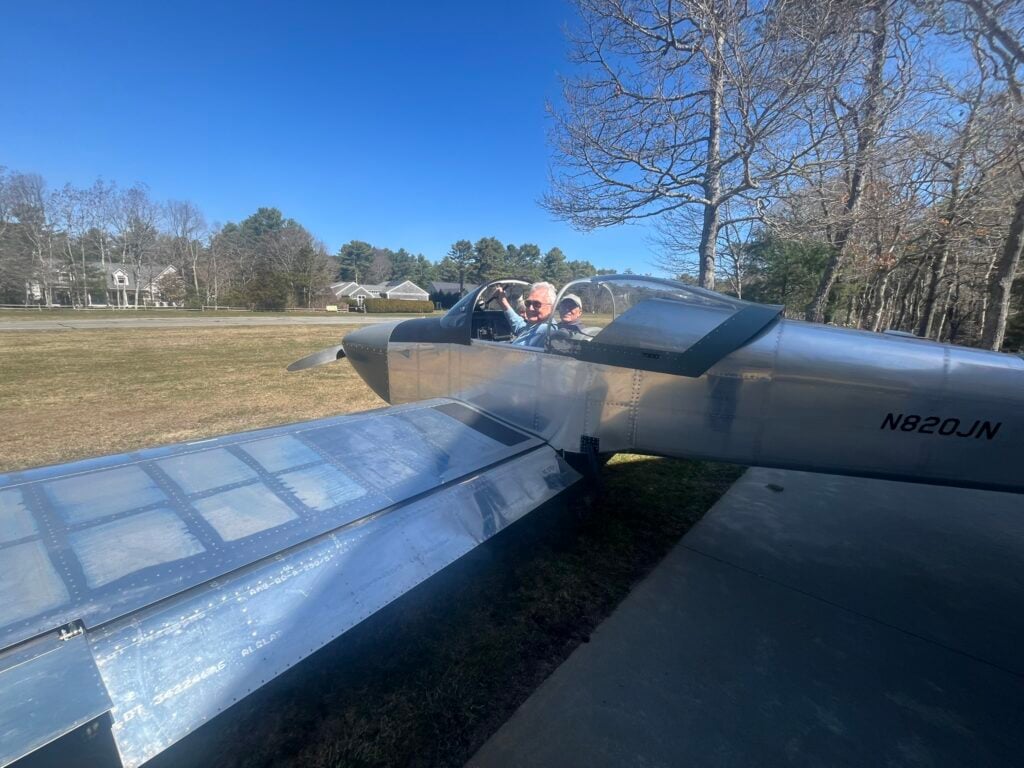
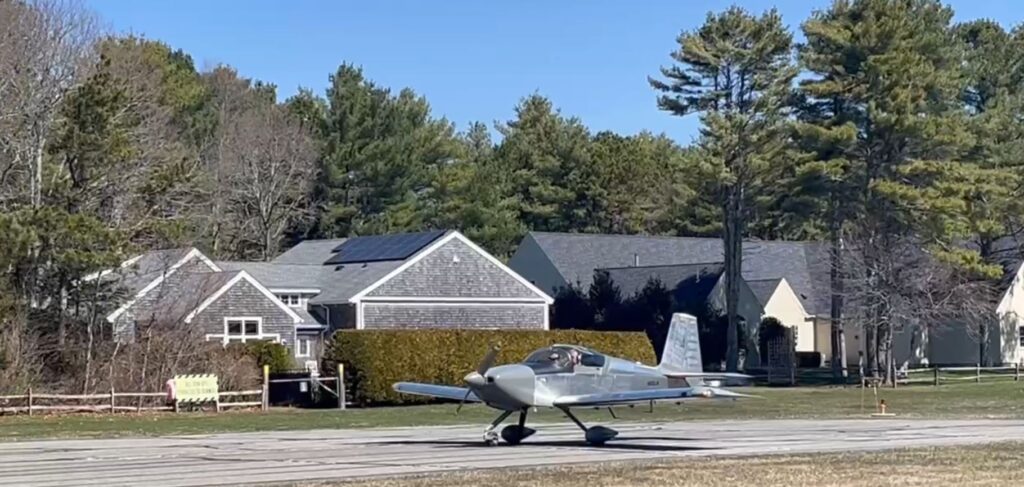
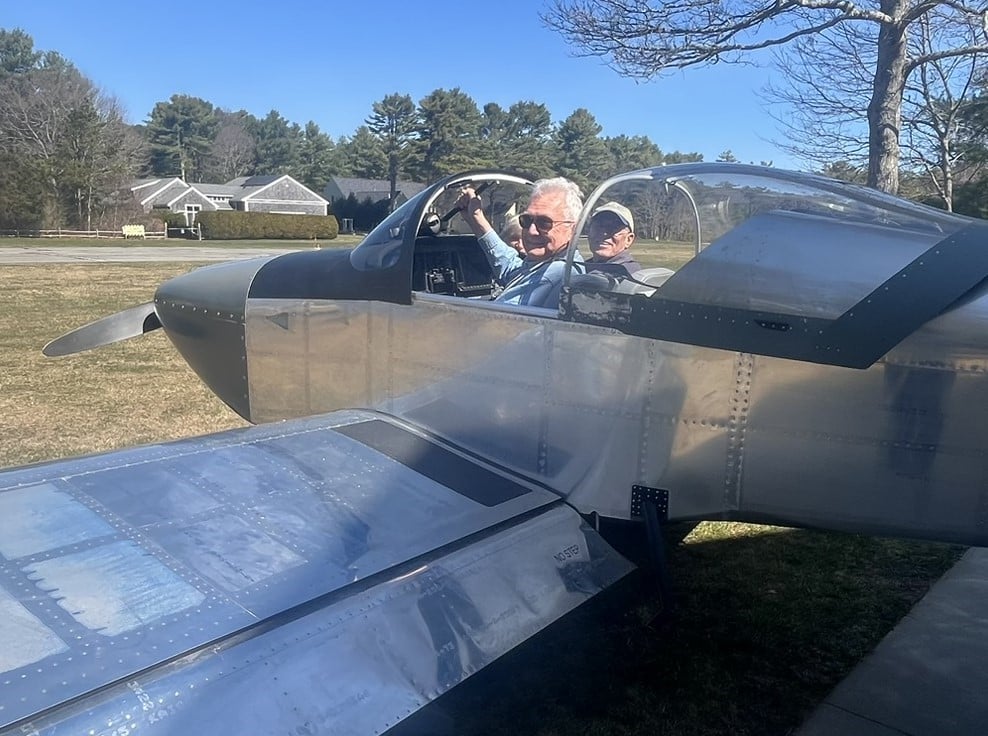
John Krug’s RV-9A | East Falmouth, MA RV-9A #91375
John Krug’s RV-9A flew for the first time. Here’s more on the RV’s build story:
After two years, nine days, and a total of 1,100 hours dedicated to building, N820JN finally took to the skies for its maiden flight yesterday. This milestone marks the culmination of countless hours of hard work, perseverance, and teamwork.
Throughout the build, I was particularly concerned about the handling qualities of the RV-9A. To prepare myself, I flew a friend’s RV-7A several times, which helped me become more familiar with the aircraft’s characteristics. Ultimately, the RV-9A proved to be a pleasure to fly—its handling was exceptional, offering both stability and nimbleness on the controls.
My friend Rick, an experienced RV builder, joined me as the second pilot for the first flight. Together, we climbed to an altitude of 8,000 feet to assess the airplane’s performance and handling. During the climb, cylinder head temperatures (CHTs) were higher than expected, we need to check the air dams on the front cylinders. I conducted a power-off stall with a clean configuration to evaluate low-speed handling, and afterward, we flew to PYM to practice landings.
First and foremost, I want to thank my wife Nancy, whose belief in me and unwavering encouragement kept me going, especially during moments of frustration. I am also deeply grateful for the remarkable support from the “Usual Suspects” at the airport. Whenever I needed a tool or part, a simple text would bring a group of these friends to assist. Special thanks go to Rick Brown, who was at the hangar nearly every day over the past few months, helping me finish the build and prepare for flight. His expertise and dedication were invaluable.
The airplane performed admirably during its first flight, although it exhibited a right-wing-heavy tendency, which is common among RV aircraft initially. There are a few issues, or “squawks,” that I need to resolve before the next flight:
• Address an oil leak from the oil cooler fittings.
• Check and adjust the pitch trim setting, as I had to maintain significant nose-down trim while flying level.
• Consider modifying the dam in front of the #2 cylinder to improve temperature management.